
Super Bowl 60 is a wrap—the Seahawks defeated the Patriots, Bad Bunny delivered an electrifying halftime show, and some of the world’s most high-profile brands spent upward of $10 million to air their ads on NBCU throughout the night.
Advertising’s biggest event is a high-risk, high-reward opportunity for brands. It’s an opportunity to persuade more than 120 million live viewers to consider buying their products. At the same time, there’s an equal chance to make a negative impression. This makes creative pre-testing all the more valuable—brands can quickly validate whether their creative has the power to drive lift, favorability, and purchase intent before buying ad slots for millions.
As a Super Bowl retrospective, our team at Swayable wanted to uncover: how did some of the most notable Big Game ads actually impact consumer perception? Were they able to positively sway viewers across brand lift metrics, or did they miss the mark?
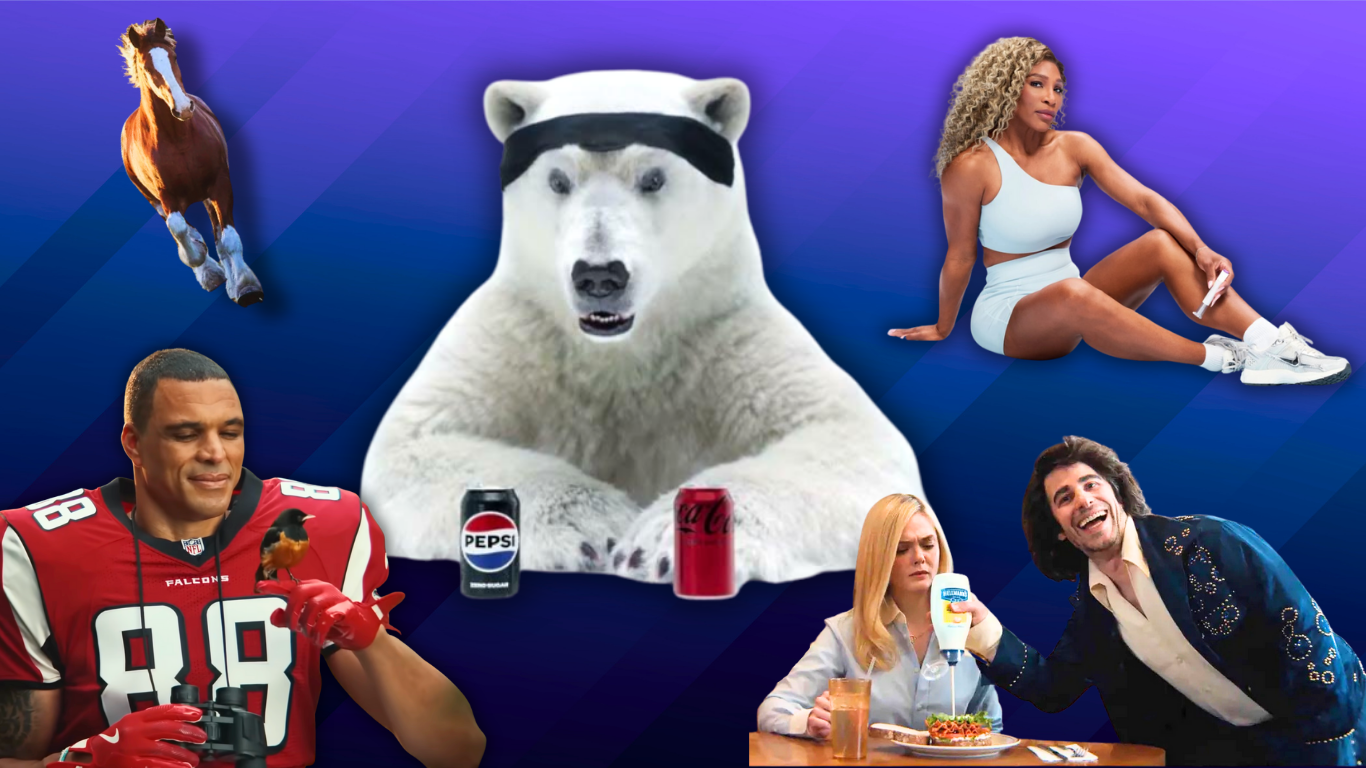
To answer these questions, we conducted a creative pre-test measuring the impact of ads from six brands that aired during the game: Pepsi, Budweiser, Novartis, Ro, Toyota, and Hellmann’s. Here’s a breakdown of key takeaways spotlighting the success and drawbacks of creative approaches that defined Super Bowl 60.
Toyota’s heartfelt storytelling outperforms across brand lift metrics
Ads that use emotional storytelling to pull at people’s heartstrings remained a consistent approach for brands—and this paid off for Toyota across brand lift, favorability, and recommendation.
The automaker’s “Superhero Belt” ad featured a grandfather taking his grandson for a drive, then flashed forward 30 years to show the roles reversed. The heartwarming 30-second spot promoted the 2026 RAV4 vehicle.
While many automakers skipped the Super Bowl this year, Toyota’s ad proved to pay off. The ad was most persuasive across all brands and categories that Swayable tested, driving the highest increases in lift, favorability, and likelihood to recommend across all audiences, household income categories, and ethnicities. The ad performed particularly well among Asian audiences, highlighting the power of representation as the story focuses on an Asian family.
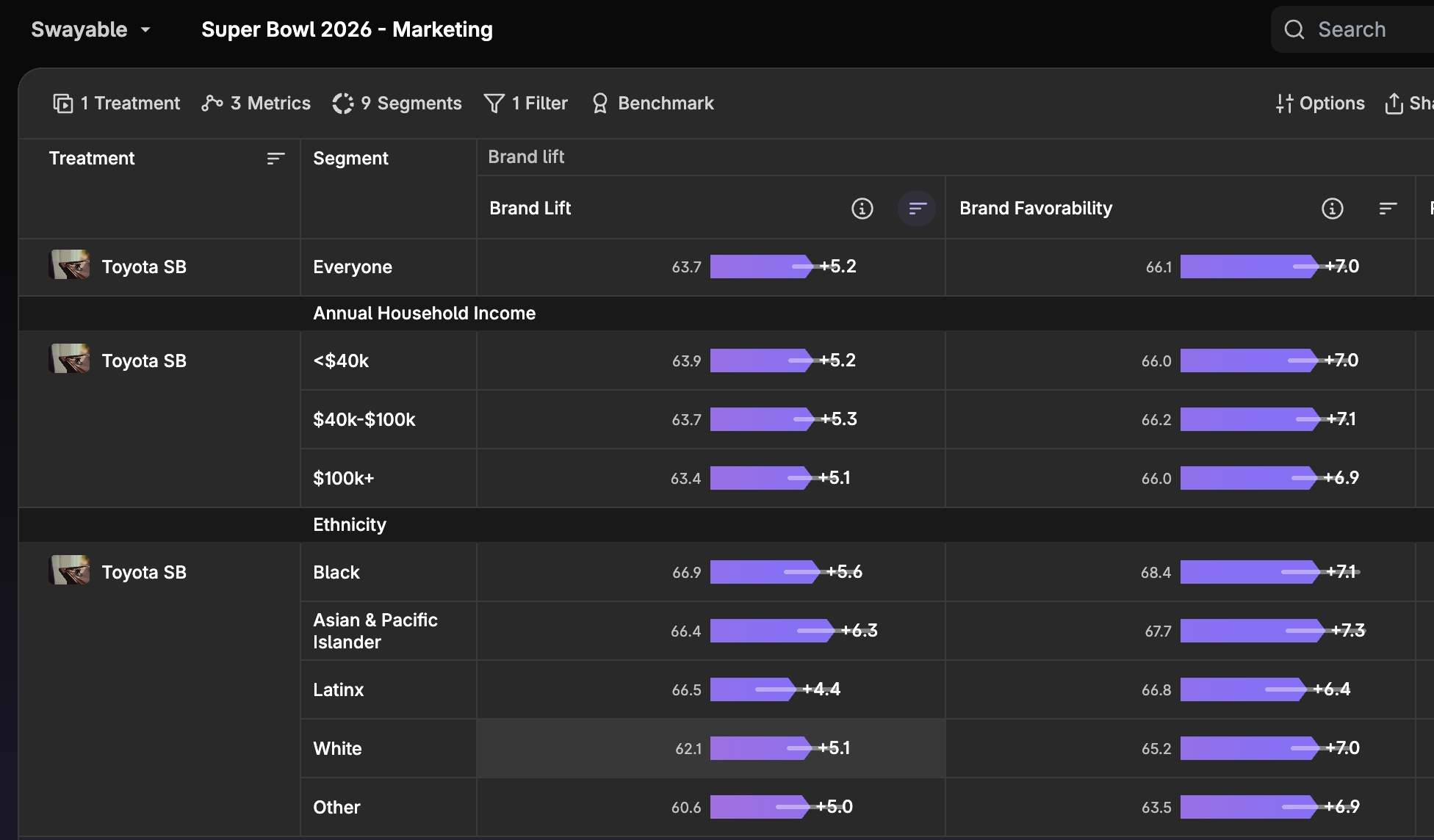 An overview of brand lift results on the Swayable dashboard.
A snapshot of respondents’ qualitative comments also spotlights the power of emotional storytelling centered around family:
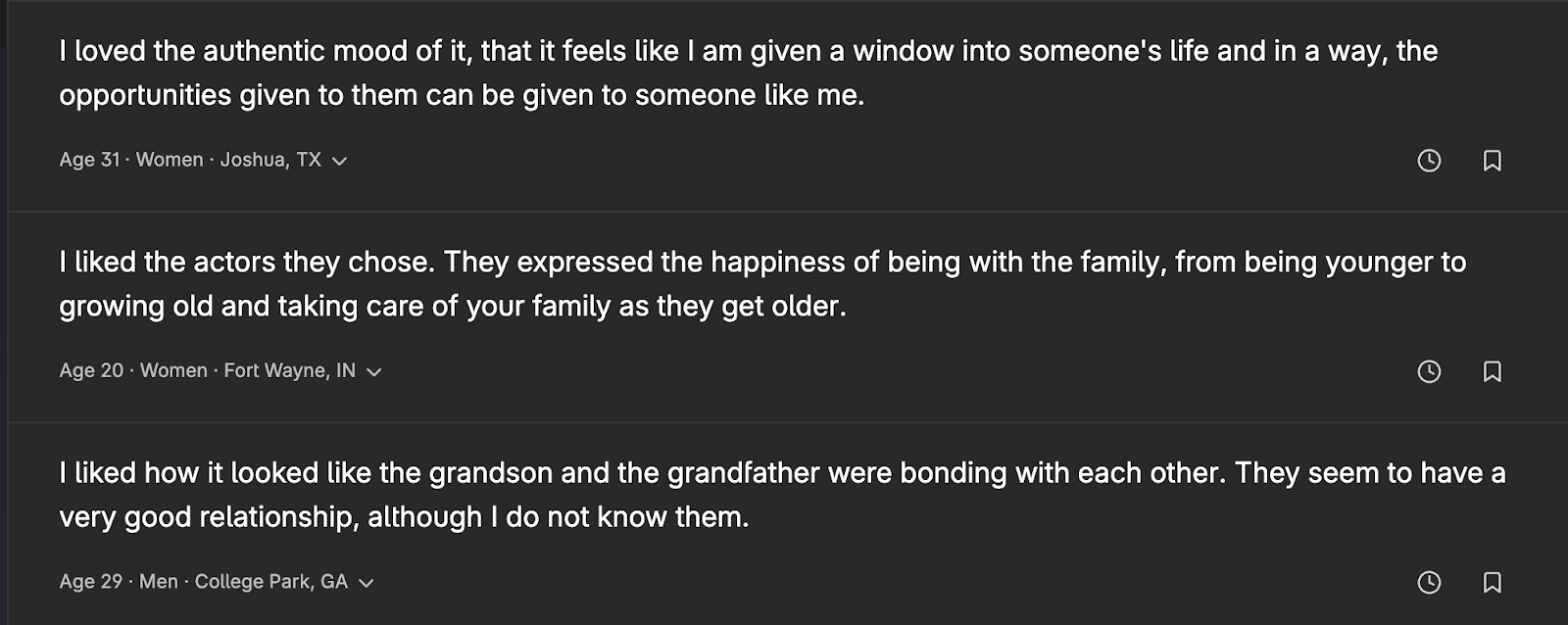
These insights suggest that using emotional narratives—particularly ones that speak to enduring family relationships—is a smart strategy for automakers to reach a wide range of demographics.
Competitive playfulness drives equity and consideration for Pepsi
Irreverent humor is a tried and true method for brands advertising in the Super Bowl—and Pepsi’s standout spot shows why. The 45-second ad, directed by Oscar winner Taika Waititi, depicts Coca-Cola’s famous polar bear mascot dealing with an internal crisis after the bear favors Pepsi Zero Sugar over Coke Zero during a blind taste test. Eventually, the bear breaks free from the past and accepts Pepsi as their go-to soft drink, all while “I Want to Break Free” by Queen anchors the story.
The concept of Coca-Cola’s mascot defecting to a competitor was a hit with consumers, showing that humor and competitive positioning are key drivers of consideration and brand equity. The ad topped the list for purchase consideration, purchase intent, and humor. Notably, the spot drove higher increases across these metrics among women and consumers living in rural areas.
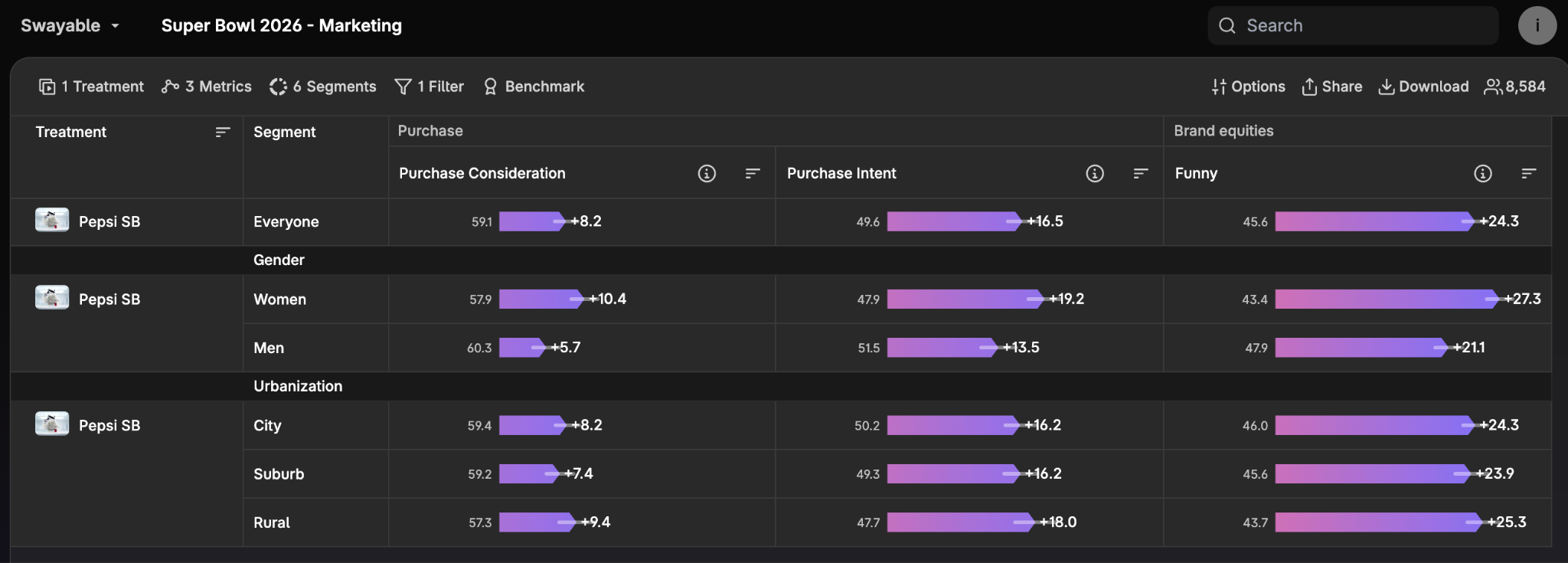
Comments from respondents also provide a qualitative view of why the ad resonated:
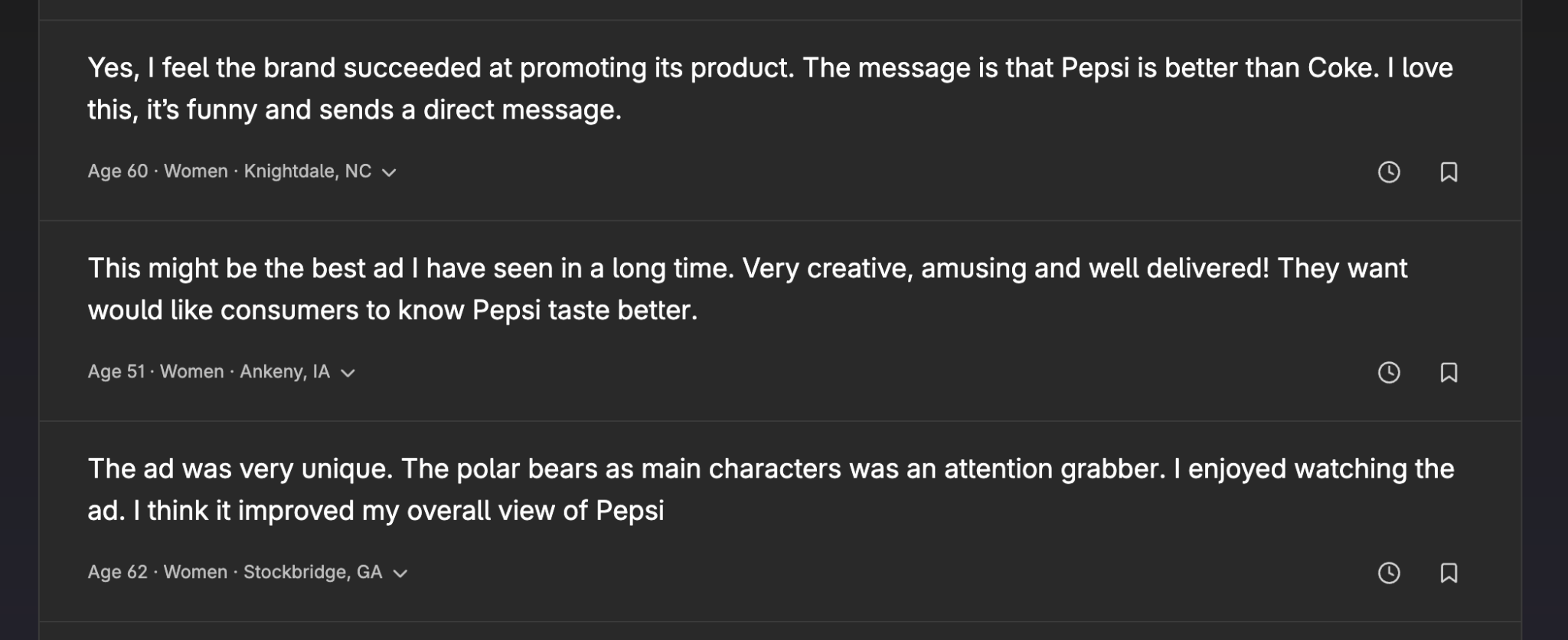
For brands in competitive, fast-moving CPG categories such as Pepsi, these results suggest that taking aim at a competitor can be a smart choice—if it’s shareable, funny, and designed to spark cultural conversation.
Ro x Serena Williams ad falls flat—reflecting previous partnership blowback
GLP-1 medicine company Ro made its Super Bowl debut with a 30-second ad featuring tennis icon Serena Williams dancing and giving an earnest testimonial about using the medication for her weight loss journey:
When Ro first announced its partnership with Williams in 2025, the endorsement received pushback from fans. The initial negative reception also translated to consumer responses to the Super Bowl spot, as the ad generated negative lift across all key metrics. People’s responses about whether the ad was authentic and credible offer more insight into why it may have missed the mark.
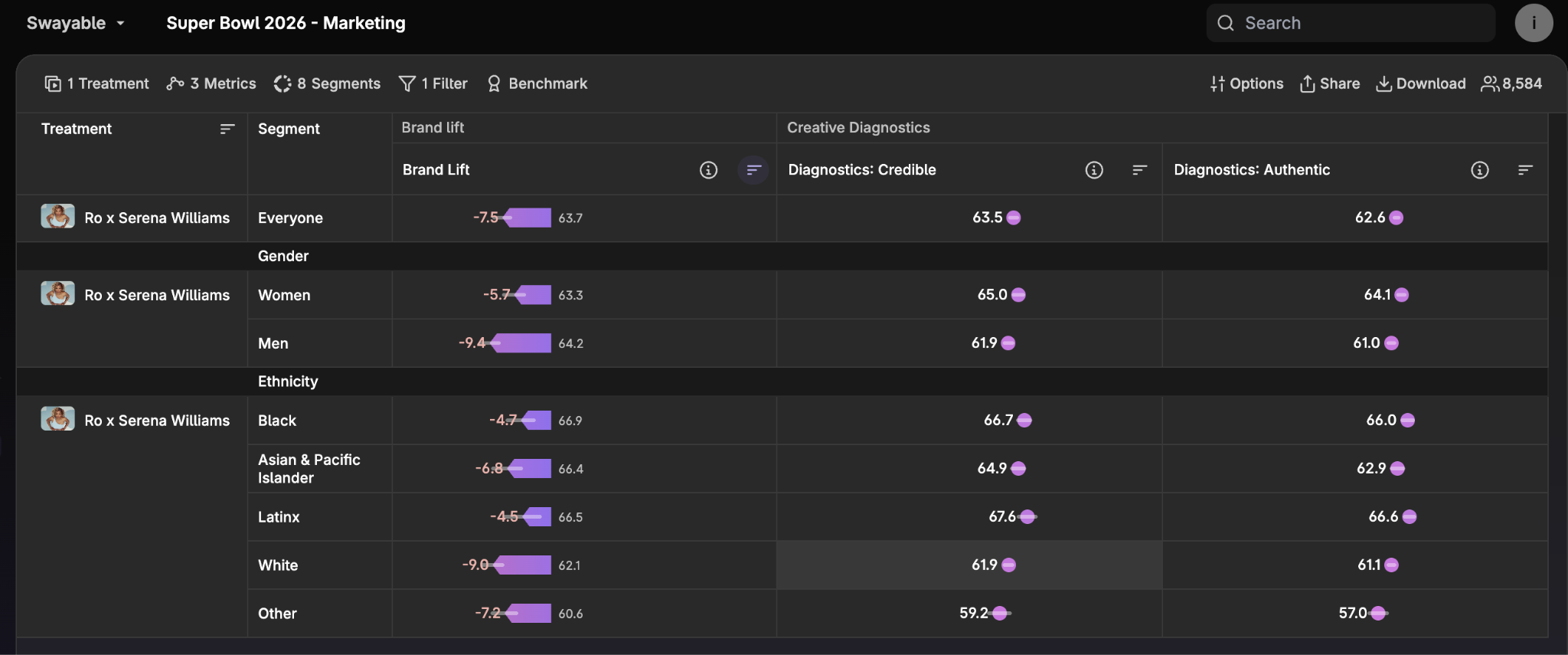
The ad scored 8-9 points lower on these trust metrics versus the top performer, Toyota. This gap is notable because Serena Williams is a real person with real reasons for using Ro, yet most segments didn’t perceive the ad as authentic—suggesting it may have come off as a transactional endorsement rather than a genuine story.
Qualitative responses (shown below) also revealed sensitivities about weight-loss medication and questioned the use of a celebrity athlete to endorse the product:
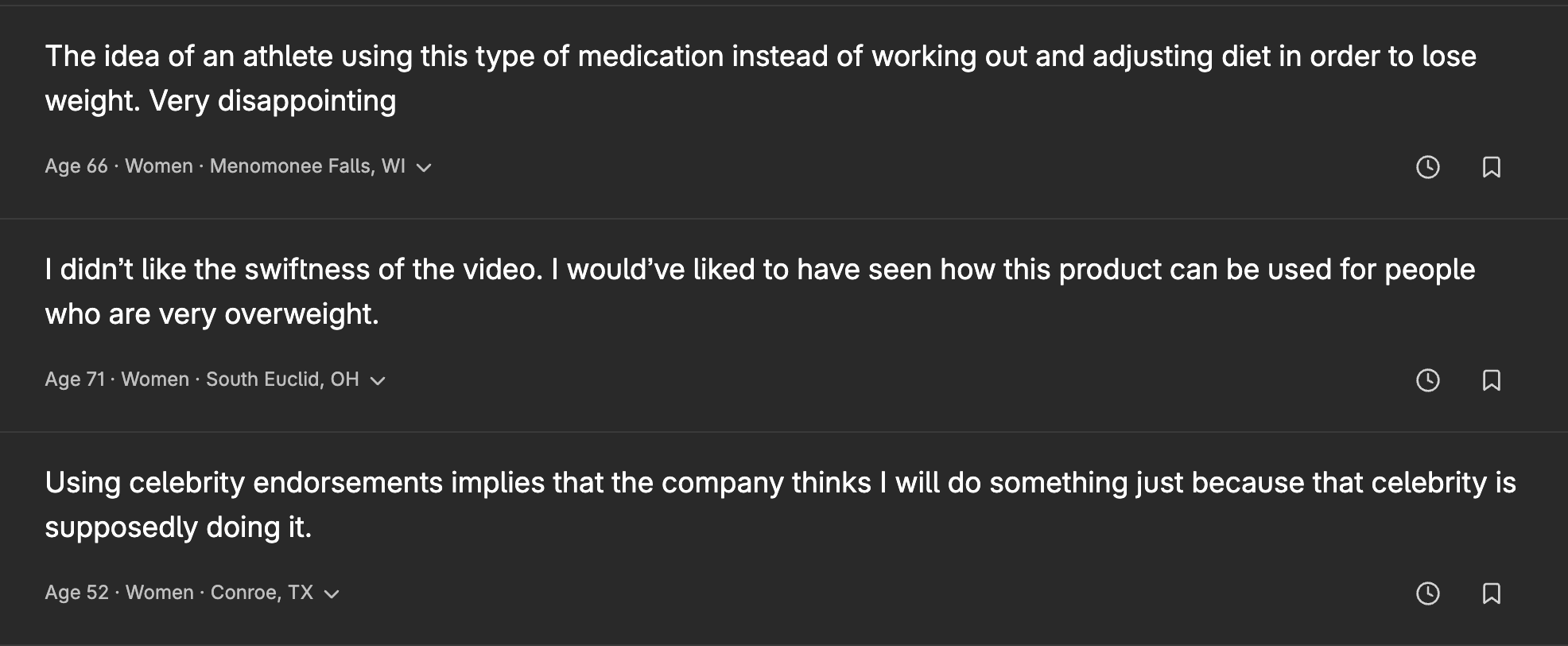
Overall, the negative response suggests that pharmaceutical brands such as Ro could consider centering future creative on emotional benefits rather than clinical outcomes—and validating audience and category alignment before committing budget to celebrity partnerships.
Swayable’s test of the ad creative speaks to the enormous value of vetting brand messaging before deploying ads into the marketplace. With millions of dollars of media at play, the stakes are too high to risk producing ads that miss the mark without first having a deep understanding of the impact they may have on consumers.
Hellmann’s, Novartis, and Budweiser find minor success across consideration and humor
The other ads we tested—from Hellmann’s, Novartis, and Budweiser—generated minor lift across key metrics including favorability and purchase intent, while scoring better across emotional response metrics such as humor, authenticity, and memorability.
Hellmann’s and Novartis both took a comedic route. The mayonnaise brand’s ad featured comedian Andy Samberg starring as “Meal Diamond” with a diner-set jingle set to the tune of “Sweet Caroline.”
Meanwhile, the pharmaceutical company—an official partner of the NFL—took a PSA-style approach featuring football stars in a tongue-in-cheek push for prostate cancer screenings.
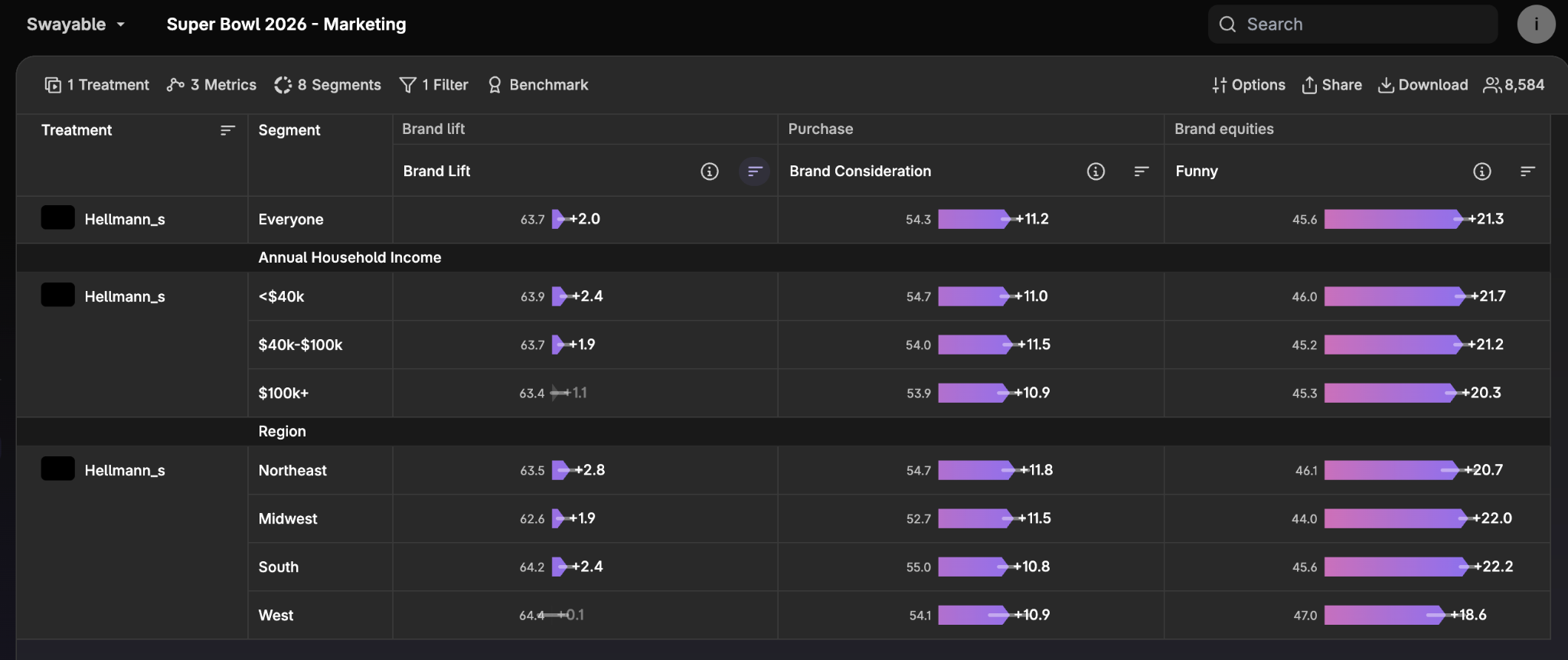
Hellmann’s proved to be a top-tier driver for humor and consideration, particularly among middle-class households. However, the brand didn’t achieve significant lift. This suggests that building on a humorous approach with a genuine product benefit or emotional moment could boost persuasion for like-minded CPG brands.
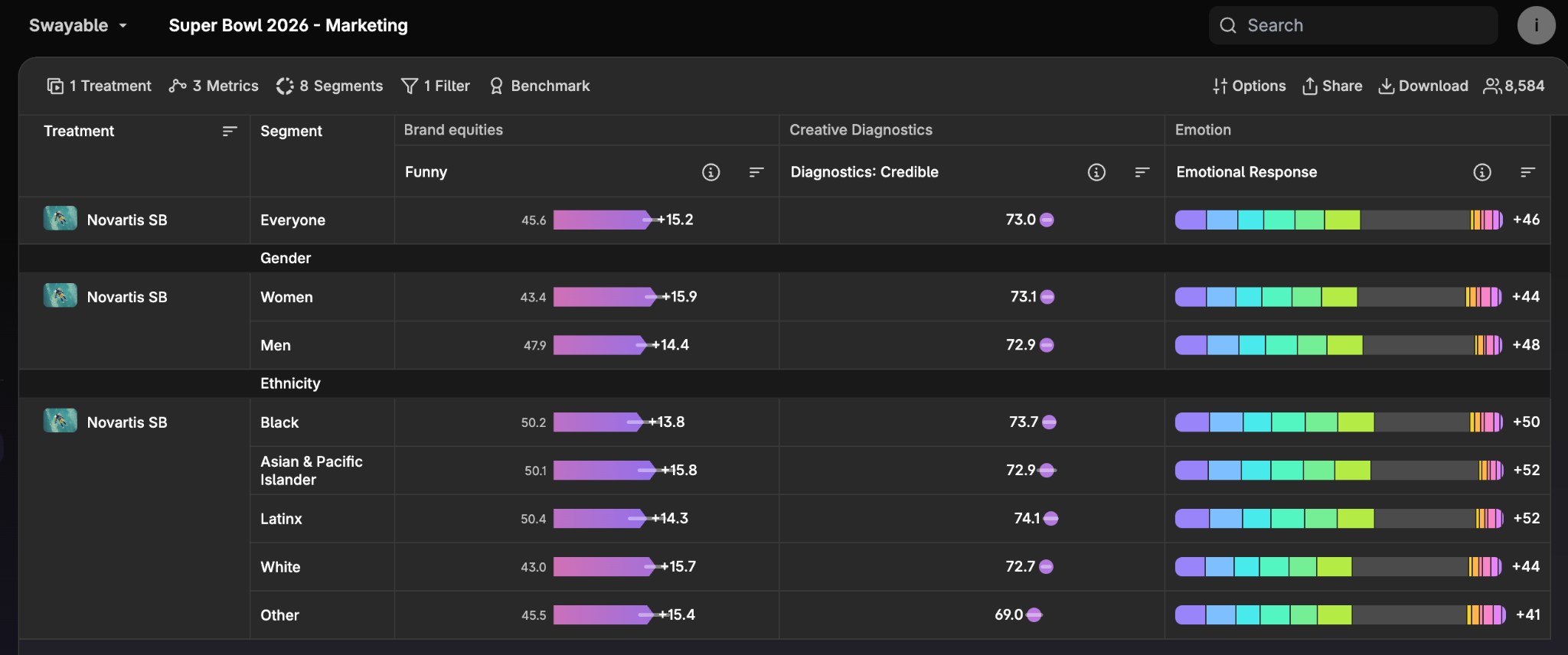
Novartis’ PSA ad built credibility and equity (particularly around humor) across all audiences, including its male target audience, but delivered emotional response scores about 30% lower than Pepsi's, which also leaned into humor.
Qualitative responses to the Novartis ad also shine light on a recurring theme of humor not quite resonating.


For healthcare advertising, these insights suggest a potential misalignment in using humor to deliver an important message—and a need to blend humor with sincere messaging going forward.
Finally, it wouldn’t be Super Bowl Sunday without a Budweiser Clydesdale ad. This year, AB InBev's mainstay brand aired a spot titled “American Icons,” depicting the friendship between a Clydesdale and a bald eagle—two animals associated with America and Budweiser.
Results showed that a segment of viewers checked out early—16% watched the full ad versus those who viewed Toyota’s in full (22%). The ad also drove slightly positive lift among white audiences, while generating negative lifts across the board for non-white audiences. Responses to Budweiser's patriotic, heritage-focused narrative demonstrate that its formula could benefit from a creative refresh, allowing the brand to reach a more diverse audience and capture their attention more quickly.
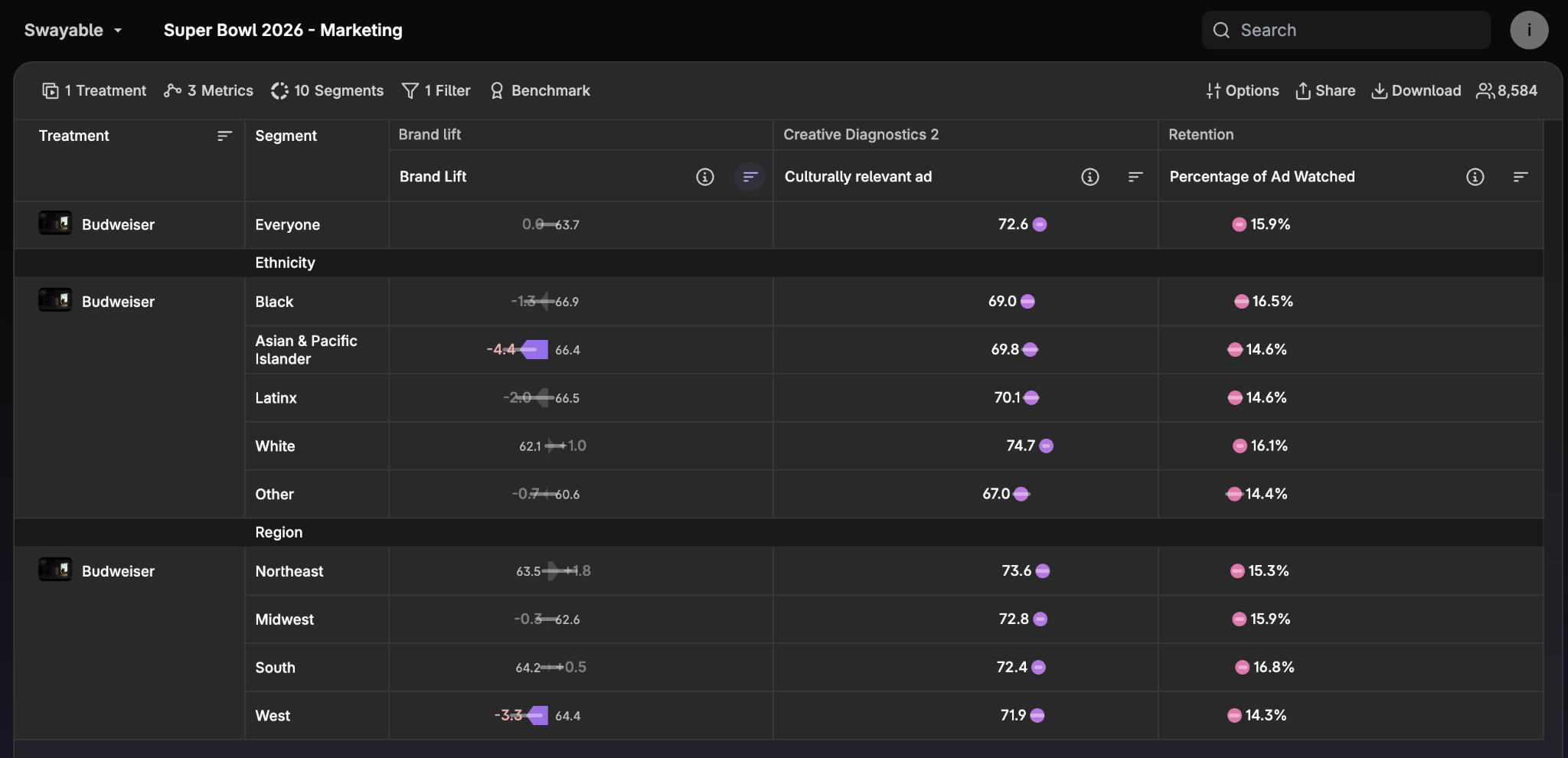
Additional testing in the form of early-stage messaging, concepts, and works in progress could help the iconic brand better understand shifting consumer mindsets and build creative that adapts to evolving market needs.
Swayable’s Super Bowl Takeaways:
-
Emotional authenticity leads to winning ads. Ads that prioritize genuine emotion drove stronger brand equity than novelty-driven creative. Toyota’s emotional storytelling lifted key brand metrics, while Hellmann’s memorable parody showed that humor can drive recall without deepening brand love.
- Demographic fit drives creative performance. Creative effectiveness shifts across audience segments, meaning what resonates with one group may fall flat with another. Results from Budweiser showed that demographic alignment is a key lift that can be validated through early testing.
- Memorability doesn’t guarantee affinity. Strong awareness or memorability doesn’t automatically translate into brand lift. Ads from Ro and Novartis generated attention without improving perception, underscoring that narrative structure and brand alignment—not just entertainment—are key to building equity.
- Creative pre-testing is vital to measure what matters. With millions of dollars on the line, marketing teams can be proactive and strategic by pre-testing their advertising concepts. Rapid insights show what works and what doesn’t with real consumers before marketers spend their budgets on producing final creative.
Interested in kickstarting your creative pre-testing process? Book a demo with Swayable today.
Methodology:
This RCT survey experiment was conducted on Swayable over 24 hours between February 3 to February 4, with responses from a total of 8,584 U.S. consumers. Questions were asked of a general population sample using Swayable’s proprietary online platform. Responses were screened using industry-standard quality control measures, including checks for attention, speeding, location verification, and demographic consistency, along with reCAPTCHA verification. Duplicate respondents are removed based on IP address and device fingerprinting.
The sample frame is U.S. smartphone users across the country with active internet connections who are users of popular mobile and web apps that make up Swayable’s network of respondent partners. Respondents are solicited from partner apps with non-monetary reward offers for their participation. Respondents were recruited with an approximately even ratio of men and women imposed via separate quotas for each. This is a “non-probability sample” (in the conventional terminology of public opinion research, although this team believes this concept is not meaningful since truly random sampling of the population is not possible via any methodology). To correct for over/under-sampling, all samples are post-stratified to the general U.S. population using cross-tabulations accounting for factors including age, ethnicity, gender, educational attainment, and geography, based on the latest available data from the U.S. Census Bureau and Swayable’s proprietary population modeling. Margins of error quoted are based on response distribution statistics and sample sizes and are calculated independently for each result. Access the survey questions here.
This research was conducted and self-funded by Swayable. Like all public opinion research, this study is subject to unmeasured sources of error that should be considered when interpreting the findings.