
Marketing has reached a tipping point where brands must break through the chaos of shifting news cycles and cultural moments. This means brands have to consistently produce content that positively sways consumer opinion—and they can’t afford to allocate budget on campaigns that miss the mark.
Yet, many teams remain hindered by a lack of quality insights: more than 50% of marketers rate their ability to develop high-quality insights as poor, and only 13% rate it as excellent, according to a Lions Advisory study.¹
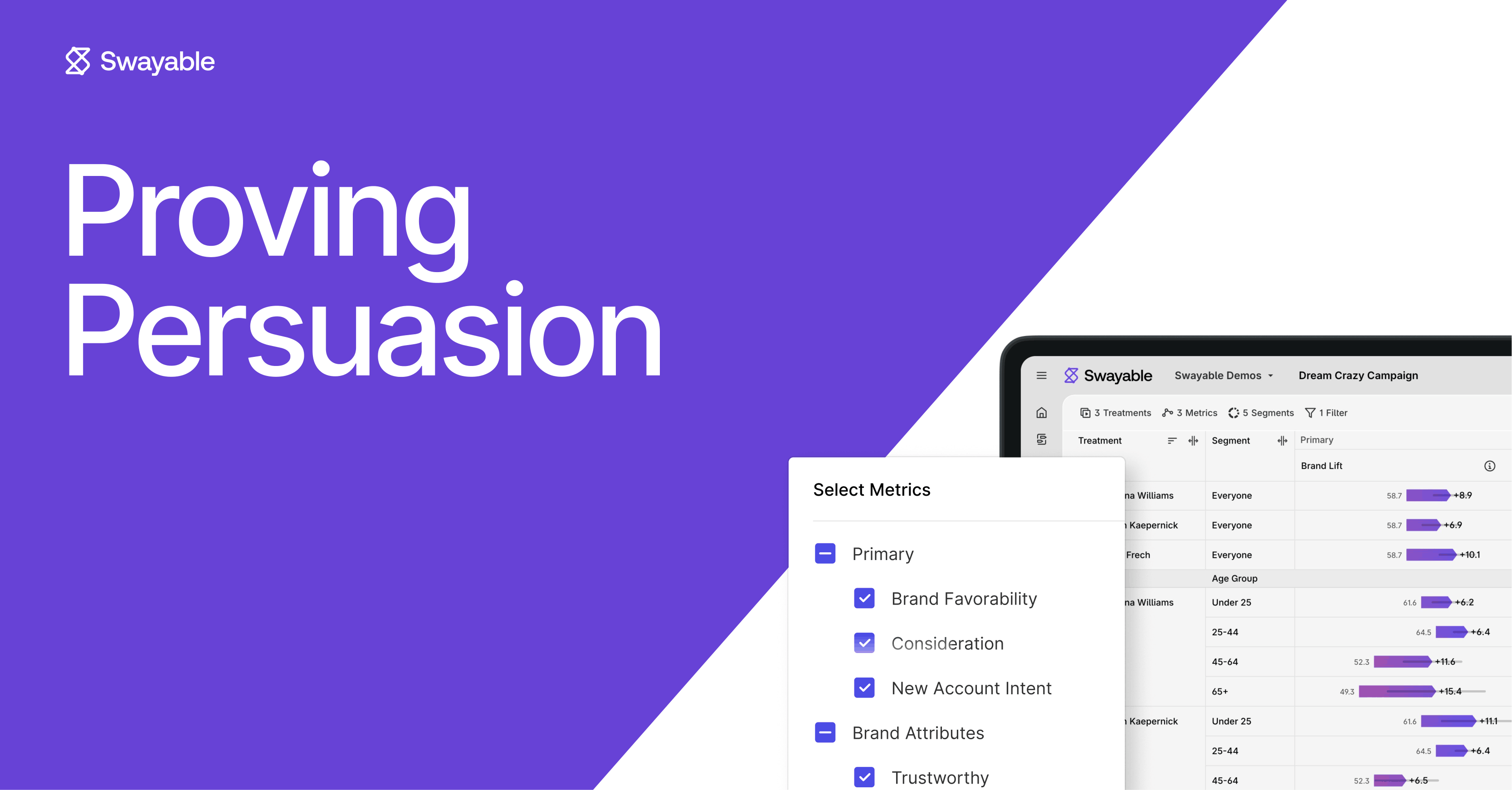
Swayable’s whitepaper, Proving Persuasion, outlines how global brands are overcoming the insights barrier. They’re moving beyond gut instinct and vanity metrics to measure the true impact of their campaigns with rapid randomized controlled trial (RCT) methodology and AI-powered insights grounded in human measurement.
Grab the free guide and continue scrolling for a breakdown of key insights for marketing teams.
The challenge: Moving beyond gut instinct
The concept of measuring persuasion has existed since the 1990s, when measurement firms
introduced brand lift studies. At the core of these studies were RCT experiments: quantitative surveys that definitively proved shifts in consumer opinion. These experiments enabled marketers to gauge the reactions of consumers randomly selected to view certain ads versus those who weren't.
In the context of today’s digital media ecosystem—where cultural trends and consumer opinions shift constantly—there are clear limitations to traditional lift studies:
- Delayed results: Traditional lift studies can take up to a month to deploy, often delivering data after the media budget is already spent.
- Irrelevant messaging: Eight in 10 shoppers ignore irrelevant marketing messages, making precision vital.²
- Reactive struggles: 57% of brands struggle to react quickly to cultural moments.³
The solution: Rapid RCTs that generate insights in 24 hours
By AI-powered creative testing, grounded in real consumer responses, brands can now generate evidence of brand lift in as little as 24 hours. This gold standard for creative pre-testing allows marketers to validate any concept—from ad mockups to brand refreshes—at any stage of development.
The platform measures critical metrics that reflect genuine changes in attitude:
- Favorability and consideration: Tracking shifts in brand perception.
- Purchase intent: Determining if a message actually drives a consumer toward a sale.
- Authenticity and qualitative feedback: Using AI to generate a contextually intelligent summary of qualitative comments.
Proving impact: Case study for global brands
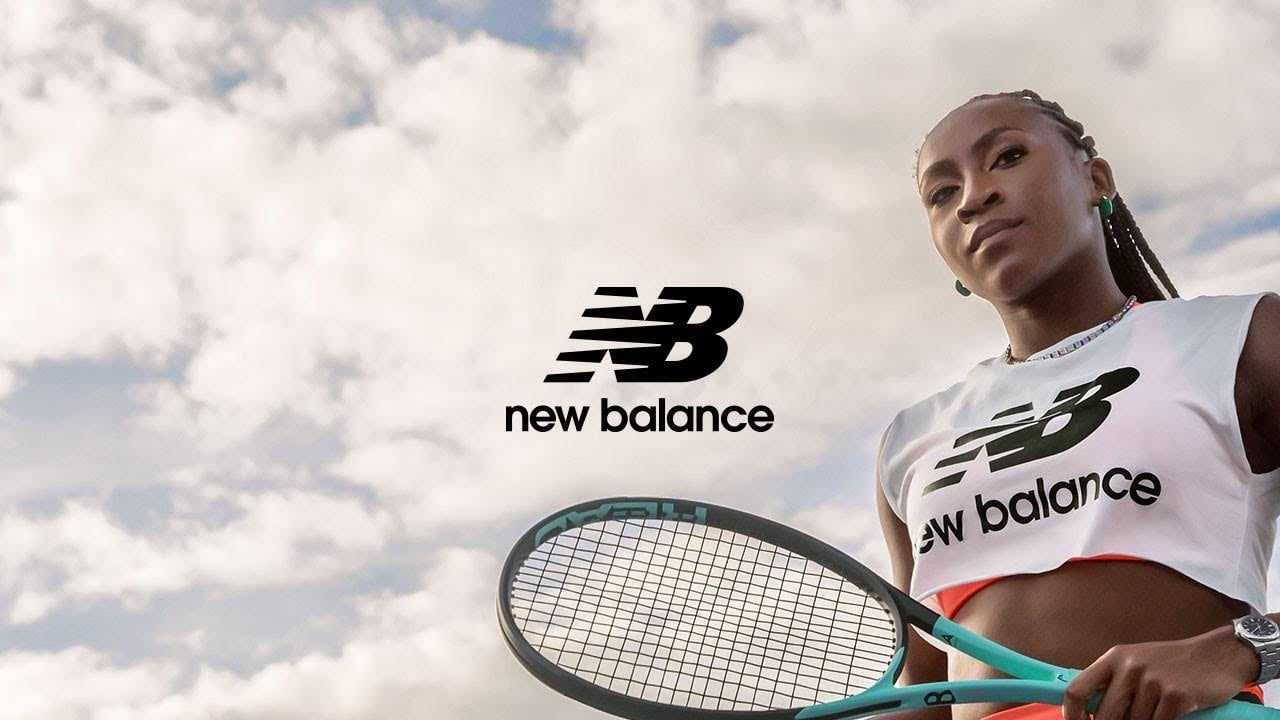
New Balance used Swayable's test insights to validate investment in its Coco Gauff ad.
The guide illustrates the benefits of rapid creative testing through real-world applications by leading brands:
- New Balance used rapid creative testing to identify that an ad featuring Coco Gauff drove the highest lift in favorability and purchase intent, allowing the brand to shift its media investment in real-time.
- Thomas’ English Muffins tested "edgy" vs. "traditional" messaging, discovering that an authentic brand voice resonated best. This led to a 7%+ sales lift in markets where the recommended creative went live.
- Outlaw Sake validated the impact of irreverent, AI-generated ad prototypes in just four weeks, significantly accelerating the brand development process.
Key performance metrics for creative pre-testing
Moving beyond vanity metrics requires defining KPIs that represent a genuine change in consumer attitude or intention. Top brands use the following core metrics to measure persuasion:
Deploying your first rapid RCT experiment
Transitioning from gut instinct to data-driven persuasion measurement requires a structured approach to testing. Here's a quick overview of how marketers and insights managers work with Swayable's Customer Success team to set up a successful creative test.
1. Define target segments
Before testing, identify exactly who you need to persuade.
- Primary Audience: Define your core demographic (such as "Global Independents" or Gen Z).
- Subsegments: Break these down by age, gender, or interests to uncover hidden opportunities.
2. Select creative treatments
Test creative at any stage to save budget by flagging ineffective ideas early.
- Prototypes and mockups: Test simple AI-generated concepts to validate a direction.
- Finished ads: Compare assets such as final 15-second spots or different celebrity endorsers to optimize media spend.
- Varied messaging: Test different tones, such as "traditional" versus "edgy," to see what resonates.
3. Choose relevant success metrics
Rather than focusing on vanity engagement metrics, select KPIs that measure changes in attitude.
- Core brand lift: Favorability, consideration, and purchase Intent.
- Content reactions: Authenticity, motivation to share, and qualitative feedback.
4. Deploy the RCT experiment
The platform automates the scientific rigor required to prove your ad caused the shift in opinion.
- Random allocation: A large panel is randomly split into two groups.
- Control vs. test: The control group sees neutral content (like a PSA) while the test group sees your ad.
- The delta: The difference in responses creates the Swayable Impact Metric, proving the lift caused by the creative.
5. Analyze and iterate
Rapid creative testing is designed to be an iterative process.
- Speed to insight: Review results in as little as 24 hours to stay ahead of cultural trends.
- Refine and repeat: Use the insights to make instrumental changes and re-test updated concepts to maximize lift.
Master the art of persuasion
Understanding the true impact of your stories is no longer a matter of guesswork or waiting months for outdated insights. By integrating rapid creative pre-testing into your workflow, you can validate marketing ideas in real-time and ensure every dollar of your media budget is working toward changing consumers’ minds. To explore Swayable’s methodology, detailed case studies, and approach to AI-powered analysis, read the entire Proving Persuasion guide.
Interested in kickstarting your rapid creative testing program? Book a demo with Swayable today.
¹ "State of Creativity 2025: A call for confidence” - Lions Advisory - 2025
² “Consumer Trends Report: The State of Personalized Marketing in 2025” - Attentive - 2025
³ “State of Creativity 2025: A call for confidence” - Lions Advisory - 2025